
Soil Inputs That Work: A Practical Guide to Healthier Crops and Safer Growing
Healthy soil is the foundation of productive farming and gardening. Whether you’re growing fruits for business or maintaining a backyard garden, the quality of your
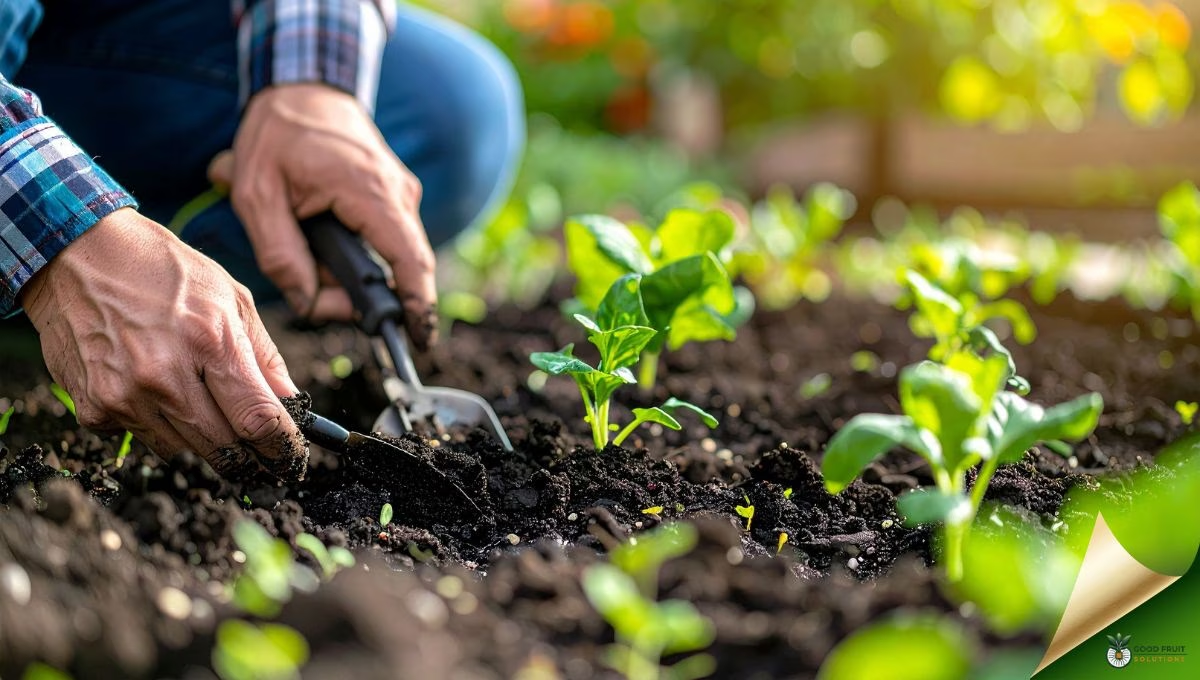
Healthy soil is the foundation of every successful farm. Whether you manage a small vegetable garden in Davao City or operate a large-scale plantation, soil health management directly determines your crop yield, production costs, and long-term farm sustainability.
For decades, many farms focused heavily on chemical fertilizers and quick-yield solutions. While these approaches may provide short-term gains, they often degrade soil structure, reduce microbial life, and increase dependency on synthetic inputs.
Today, forward-thinking farmers understand a simple truth:
Sustainable farming begins with building the soil, not just feeding the plant.
This comprehensive guide explains what soil health management truly means, how to improve soil health naturally, and why it has become a critical financial and environmental strategy in modern agribusiness.
Soil health management is the systematic practice of improving and maintaining soil’s biological, chemical, and physical conditions to support plant growth efficiently and sustainably.
Healthy soil is not just “dirt.” It is a living ecosystem.
Healthy soil should:
Compacted or overly tilled soil reduces oxygen flow and weakens plant development.
Soil must maintain proper:
Excess chemical fertilizer may temporarily correct deficiencies, but often worsens long-term imbalance.
The most overlooked component of soil health is microbial life.
Healthy soil contains:
These organisms break down organic matter, cycle nutrients, and protect plants from disease.
When biological activity declines, soil becomes dependent on synthetic inputs.
Modern agriculture faces rising challenges:
Improving soil health naturally addresses all these issues simultaneously.
Healthy soil:
For agribusiness owners, soil health is not just an environmental concern.
It is a strategic investment.
Many farmers ask: How do you improve soil health without relying heavily on chemicals?
Here are proven, sustainable approaches.
One of the most effective soil health management practices is replacing synthetic with organic fertilizers.
Examples include:
Organic inputs improve:
Unlike synthetic fertilizers, organic materials build soil rather than exhaust it.
Over time, this reduces input costs and improves yield consistency.
Monocropping depletes specific nutrients and encourages pest buildup.
Crop rotation improves soil health by:
For example:
Even small vegetable farms can significantly improve soil fertility by rotating crops seasonally.
Excessive plowing disrupts soil biology and damages structure.
Low-till or no-till systems:
In tropical areas like Mindanao, reducing tillage can significantly prevent soil degradation during heavy rains.
Healthy soil should remain biologically active and structurally intact.
Cover crops are planted primarily to protect and nourish the soil rather than for harvest.
Benefits include:
Common cover crops in tropical climates include:
These crops improve soil naturally between main planting cycles.
Modern soil health management combines traditional knowledge with technology.
Tools now available include:
Drone technology, in particular, allows farmers to:
For farms in Davao City and surrounding provinces, aerial monitoring is becoming a competitive advantage, especially for high-value crops such as cacao, coffee, and banana, as well as bee forage areas.
Many farmers only act when yields decline.
Watch for these warning signs:
If your farm exhibits these symptoms, your soil health management strategy needs to be reassessed.
Ignoring soil issues compounds problems over time and increases operational costs.
The approach differs depending on farm size.
Small farms can:
Flexibility is their advantage.
Large operations require:
This is where technology and professional agrisolutions become essential.
Healthy soil increases profitability by:
For investors and agribusiness owners, soil is not just land.
It is capital.
Farms with strong soil health management systems are more resilient, scalable, and attractive to buyers or partners.
As agriculture becomes more technical, farmers increasingly seek:
Good Fruit Solutions understands that agribusiness is no longer just about planting and harvesting.
It is about positioning, sustainability, and profitability.
Companies that combine agricultural expertise with digital strategy will dominate the next decade.
Sustainable farming is impossible without strong soil health management.
The farms that will thrive in the coming years are those that:
Healthy soil today means:
Better harvest tomorrow.
Lower costs next year.
Stronger agribusiness for generations.
The future of farming is not about adding more inputs.
It is about restoring what truly matters: the soil.
Healthy soil is the foundation of productive farming and gardening. Whether you’re growing fruits for business or maintaining a backyard garden, the quality of your
Healthy soil is the foundation of every successful farm. Whether you manage a small vegetable garden in Davao City or operate a large-scale plantation, soil