
Soil Inputs That Work: A Practical Guide to Healthier Crops and Safer Growing
Healthy soil is the foundation of productive farming and gardening. Whether you’re growing fruits for business or maintaining a backyard garden, the quality of your
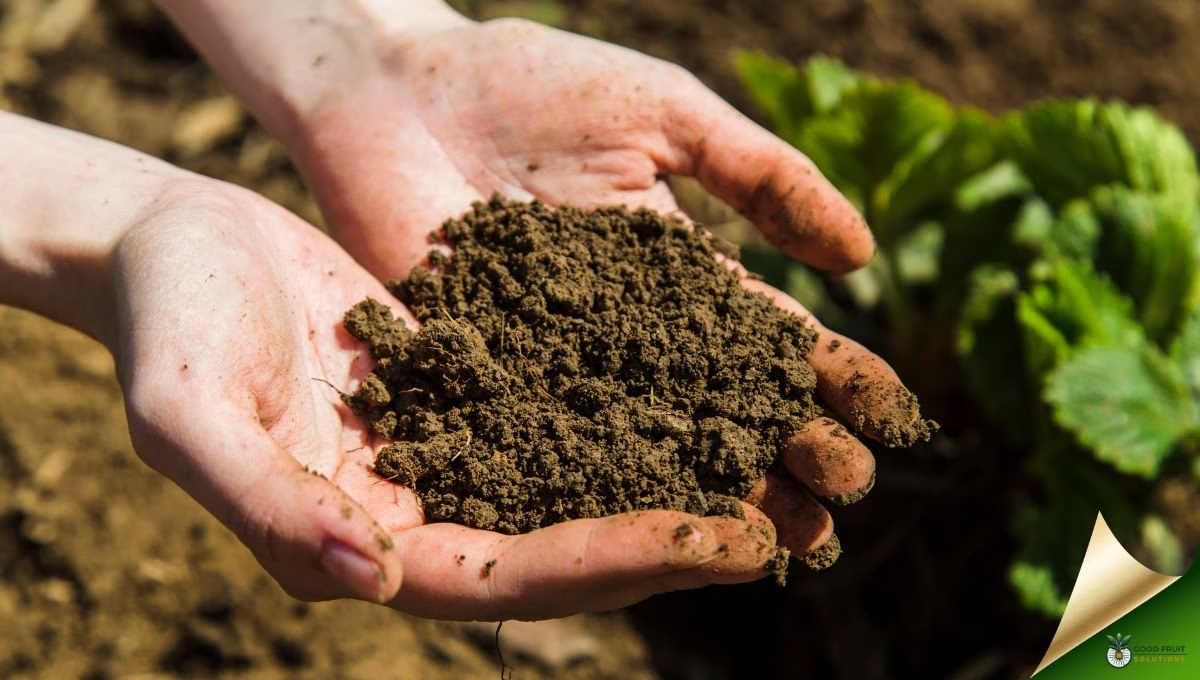
Healthy soil is the foundation of productive farming and gardening. Whether you’re growing fruits for business or maintaining a backyard garden, the quality of your soil directly affects plant growth, yield, and even food safety.
At Good Fruit Solutions, we believe that choosing the right soil inputs is not just about boosting production. It’s about building a sustainable, safe, and efficient growing system.
In this guide, we’ll break down essential soil inputs, how they work, and how to use them effectively.
Soil inputs are materials added to soil to improve its fertility, structure, and biological activity. These inputs influence:
Plants need essential nutrients such as nitrogen (N), phosphorus (P), and potassium (K), as well as micronutrients. Without proper supplementation, soil becomes depleted over time.
Good soil structure allows proper root growth, water retention, and drainage. Poor structure leads to compaction or waterlogging.
Healthy soil is alive. Beneficial microbes help break down organic matter, making nutrients more available to plants.
Choosing the right input depends on your soil condition, crop type, and long-term goals.
Organic inputs are derived from natural sources and are ideal for sustainable farming.
These are synthetic or mineral-based inputs designed for targeted nutrient delivery.
These inputs focus on enhancing soil life rather than just adding nutrients.
Not all inputs are suitable for every situation. A strategic approach ensures better results and avoids waste.
Conduct a soil test to determine:
This prevents guesswork and over-application.
Different crops have different requirements:
Overuse of harsh chemicals can:
Balanced use of organic and safe-input solutions is key.
Applying inputs correctly is just as important as choosing them.
More is not always better. Over-application can:
Soil health improves gradually. Regular, balanced input application leads to:
Short-term gains are helpful, but long-term soil health is the real goal.
A balanced system includes:
Observe your crops:
These indicators help you adjust your soil input strategy.
Healthy soil reduces:
Soil doesn’t just grow plants. It influences the safety of the food we eat.
Poor soil management can lead to:
Using safe, well-balanced soil inputs ensures that your crops are not only productive but also safe for consumption.
Soil inputs are not just farm expenses. They are investments in productivity, sustainability, and food safety.
By understanding what your soil needs and applying the right inputs properly, you create a growing system that works efficiently and responsibly.
At Good Fruit Solutions, we are committed to helping growers and families choose the right products and practices for safer, healthier results from soil preparation to harvest.
Healthy soil is the foundation of productive farming and gardening. Whether you’re growing fruits for business or maintaining a backyard garden, the quality of your
Healthy soil is the foundation of every successful farm. Whether you manage a small vegetable garden in Davao City or operate a large-scale plantation, soil